Showing posts with label know yourself as a writer. Show all posts

Monday, May 22, 2017

Compiling a Book of Poems: Post #1

Almost since I started writing poems in 2010, I've wanted to put together a collection or book of my poems.  Of course, you have to have enough poems written to fill a book first.  It's taken me years, but I've got almost enough really good poems to create at least a collection.

Being a methodical person who doesn't enter into things like this lightly, I've begun to research the best way to put together a book of poems for publication, whether just for me or for sale.  Thus far, I've found some very good sources.  The links are at the bottom of this post.

One important question I think a poet must ask is whether you want to publish strictly for yourself or to sell to the public.  I believe this is important, because if you are merely putting a collection together for your own enjoyment, the guidelines are more lax.  You don't have to adhere to the conventions of publishing.


With that said, I've decided that my first endeavor will be strictly for myself because I would like to have more of my individual poems published before I try to make sales.  Furthermore, I will say that, even though I'm currently undertaking this task for my own enjoyment, I do not like reinventing the wheel.  I will, therefore, be attempting to put my collection/book together using the conventions that are expected for a published work.

Let's start at the beginning.  
Reviewing your poems is the first step.  All the sources I've read, see links below, have various strategies outlined for reviewing your work to determine what will go into your book.  Of all the varied suggestions, printing out all your poems is a good first step.  While many of us have our poems saved in an electronic document, there's nothing like pen and paper for editing, sorting and labeling.

So, I've printed all the poems I feel are ready to go into a book, or that I want to go into a book.  I have just over 70.

Editing:
This part is both hard and fun at the same time for me.  It's hard for me when the poem I need to edit is good as is, but I know it can be better.  In cases like this I will always preserve the original before editing a copy.  Sometimes, I end up with two poems when this happens.

Editing is fun for me because I like to look at something and try to make it better.  I recently took two of my formless poems and made them into palindromes or mirror poems.  These are poems that read the same forward and back.  When you read a mirror poem you get to the half-way point and the poem reads backwards to the first line.

Here's one that I just created by editing one of my poems:
Raindrop Patterns
October 12, 2010
By Kimberly L. McClune

Raindrop patterns
Random patterns
On the window
Pooling in the corners
Gathering on the sill
Small rivers creeping down my window
Gathering on the sill
Pooling in the corners
On the window
Random patterns
Raindrop patterns

To be honest, I'm still in the editing stage with my poems.  There are about 10 that I feel need to be gone over before I feel they're strong enough for publication or inclusion in a book or collection.  I may even try publishing a few of them individually before I finish this project.  

While I finish editing, you can take a look at the links below to read about putting together your own poetry book or collection.  These are the articles or sites I found to be the most helpful.

Next week I'll post on the next step, Sorting and Organizing Your Poems.  I'll also share another edited poem.

Enjoy the Spring for Summer is mere weeks away.

Leave me a comment so I know you were here.

Poets & Writers
Long but thoughtful post. 

wikiHow

Writer’s Digest


Thursday, April 13, 2017

Nonsense Poems

It’s Poetry Month so it’s time I got off my, “I’m too busy with other things” high horse and did some writing.  If I’m going to write, it’s going to be fun because I am extremely busy, so it’s going to be nonsensical.  I enjoy writing nonsense and reading it too. 

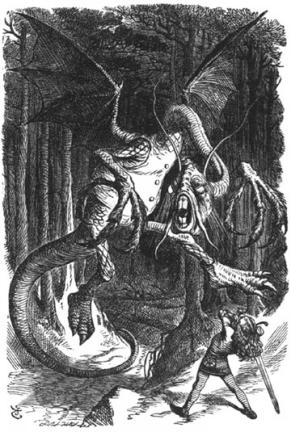
If you’re not sure you know any nonsense poems or not sure what it is, may I direct your attention to the Jabberwocky or almost any Dr. Seuss works.  In these you will find some essential elements to a nonsense poem such as, made up words and silly story-lines.

For instance, the Jabberwocky is riddled with made up words that most can’t even figure out how to pronounce, let alone determine their meaning. 

`Twas brillig, and the slithy toves
Did gyre and gimble in the wabe:
All mimsy were the borogoves,
And the mome raths outgrabe.


(from Through the Looking-Glass and What Alice Found There, 1872)

As you can see in this first stanza from “The Jabberwocky” there are very few familiar to guide us.  There is some description of the location, and there appear to be creatures or things doing some sort of activity, or behaving in some fashion.  Reading more we understand that there is a creature called a Jabberwock, that a fight ensues, and it is slain.  I love how I can let my imagination take me in any direction it chooses each time I read it.

Dr. Seuss manages to use made up words and tell silly stories that can teach and entertain.  For instance, in the Lorax we have many made up names and words.  He tells us of  “Grickle-grass,”  “gruvvulous gloves,” and, of course, the “Truffula Trees.”  He weaves with language creating delicious worlds, and gently pulls us in to take part.

If you’re like me, you may not be quite clever enough to invent words or a language or even a different world for your poems.  So, I choose to write nonsense using the things around me.  Here’s a sample of a poem I wrote a number of years ago while sitting at my desk at work.  I remember I was trying to work out a problem on a file and let my mind wander to all the stuff at my desk.

Nonsense Poem
September 2011

Excellent educational teamwork brings clarity to rocking regional knots.
Spinning paper scribbles integrate quick mail monkeys s
Stacking plastic keys under tables.

Tinker Bell violence, after inspection,
Credits calendars with water trash before folders help index text.

To write poems like this you must be knowledgeable in the parts of speech and all the different ways a word can be used.  For instance, in this piece the word ‘index’ in the last line is used as a verb.  So, as I look around my desk now I can identify things whose names can be used as a noun or verb or adjective.  These are the words you can use to make this type of poem come together.  Here’s another example.

Whirlpool filters swirl around Arizona sugar
Silver magnets multiply root beer carafes
Please refill igloo hot pads.


I wrote this while standing in the kitchen of the office where I currently work.  Once again, I let my mind wander over the words and items I saw around me and put down these lines on a post-it note.

It’s silly and fun to write poems like this.  It’s also a good exercise for your brain to work out how the words for thing can be used to write out sentences. 

I challenge my readers this month to take a few moments to write or read some poetry.  Simply enjoy the words, let your mind wander over them as you read or create them.  If you write anything and would like to share, please leave me a comment.  Or, simply leave me a comment anyway.  I’d love to hear from you.  

Friday, September 4, 2015

Know Yourself as a Writer

Recently, I was trolling about on a few writing blogs that I follow and found a post about knowing yourself as a writer.  Click here to access that blog post.  The author presents an exercise to help clarify reasons and motivations for writing as well as setting some goals.

Knowing your motivation and goals for writing, regardless of genre, theme, or style can be critical in your success, especially if you strive to make a career as a writer.  

When working on this exercise, I found myself feeling torn.  On the one hand, I write blogs for others and earn a bit of money.  On the other, I write my own blogs for practice and to express or share things that are meaningful to me.  On yet another hand, not sure where I get this hand from, I write poetry for myself and occasionally for others.  If my poetry is published, then it's an exciting bonus.

Would I love a full career as a writer?  I'm not certain.  While I enjoy writing and believe that I have some skill/talent, I'm not sure I want it to be my career, at least not right now.  Do I want to be a full time writer someday?  Yes, I do very much.

My answers to the questions in this exercise revealed an important fact about my writing that I need to change or I will not move forward, I need to spend more time writing.  Honestly, I spend too much time on wasted activities during my non-working hours.  It's a constant struggle, as I'm sure most can relate to.  In my own words from my post on August 3, 2015, "to be a good writer, you have to practice writing."  I hereby pledge that I will write for at least one hour everyday, 'cross my heart, hope to fly, stick a cupcake in my eye!'  (Yes I will quote, and even swear an oath, from My Little Pony)

Another thing I learned about myself as a writer is that I write to tell stories.  Stories have always been a way for me to share my own thoughts, feelings and experiences with others.  I believe that I have always been a storyteller and always will be.  There are just multiple ways that I enjoy sharing a story.


What I have discovered about myself as a writer by answering these few seemingly simple questions is so enlightening.  Read through this post on Writing Forward and see what you learn about yourself. This blog is a very good for any writer of any genre or style.

Just by perusing some writing blogs that I enjoy, I found an exercise that has revealed some important aspects of myself as a writer.  In another six months to a year I'll answer these questions again to see if I've changed at all. I'll post my results here.  Comment below on how this exercise affected your outlook on writing and your knowledge of yourself as a writer.  I'd love to know more about you and your writing.